Winters around Independence are unpredictable. A week of 50 degree days can be followed by freezing rain and a morning near zero. The January 2002 ice storm left hundreds of thousands of people in the Kansas City area without power, some for more than a week, and smaller ice events still turn up most winters. Garage doors don't love any of it.
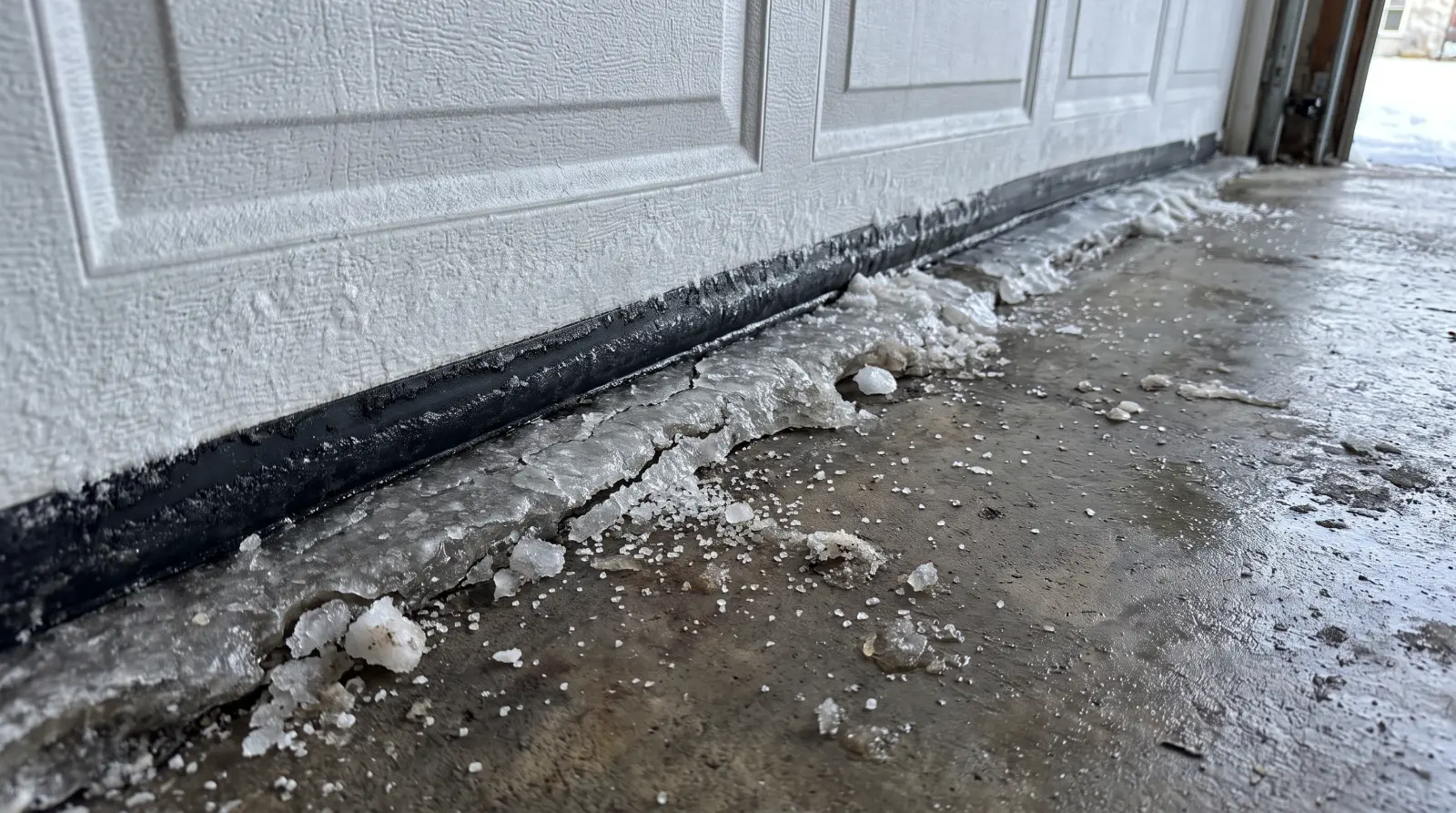
If your door is frozen to the floor
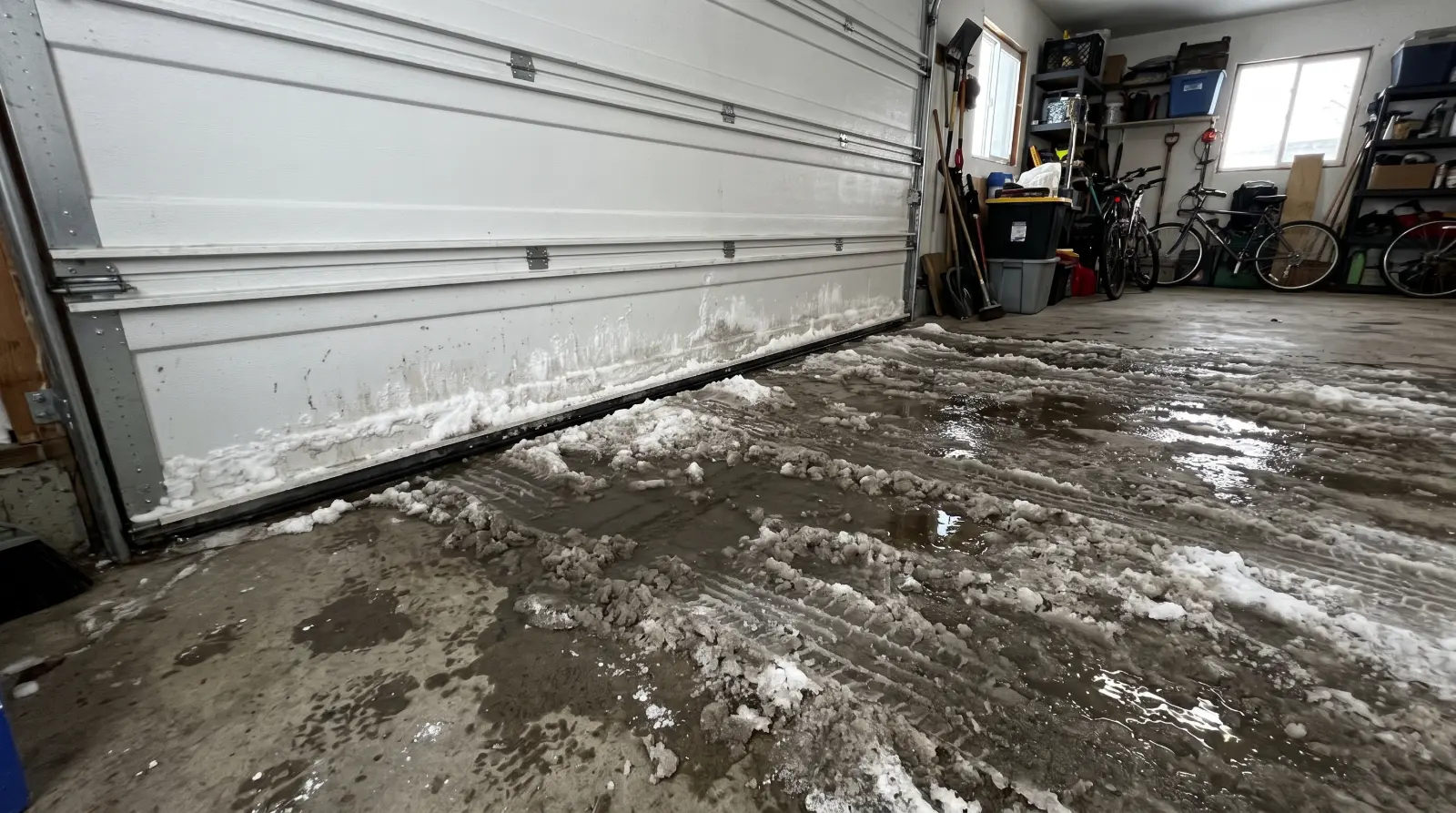
When melted snow runs under the door and freezes overnight, the bottom seal gets glued to the concrete. The opener pulls, the door won't come up, and something gives: the seal tears, the opener gear strips, or the opener reverses and you're stuck.
- Stop pressing the button. Each try strains the opener and the bottom of the door.
- Break the ice gently along the seal with a plastic scraper or a putty knife held flat. Don't use a shovel or pry bar under the door.
- Add some heat with a hair dryer or a heat gun on low, kept moving. Warm water works too, but dry the area right away so it doesn't refreeze.
- Try it by hand if the door is balanced, or run the opener once.
- Clear the slush from the floor under the door so it doesn't happen again tonight.
If the door moves a few inches and stops, or the opener hums without lifting, the problem may not be ice. Run through the won't open checklist. A spring may have broken in the cold. See broken springs.
Why springs break on cold mornings
Steel is more brittle when it's very cold, and a spring that's already near the end of its life often lets go on one of the first hard freezes. If you hear a bang from the garage on a frigid morning, that's the likely culprit. Don't try to force the door open to get the car out. Call and describe what you heard.
A fall checklist before the first freeze
- Look at the bottom seal. If it's flattened, cracked or torn, it's due for replacement. A good seal sheds water instead of holding it.
- Lubricate the moving parts. Hinges, roller bearings and spring coils, with a garage door spray. Not inside the tracks.
- Do the balance test. Disconnect the opener, lift the door halfway and let go. If it falls or rises, the springs need attention before winter.
- Check the cables and bottom brackets for fraying and rust, especially on doors that have seen a few winters of salt.
- Test the auto-reverse. Place a block of wood under the door and close it. It should reverse when it touches the block.
- Check the side and top weatherstripping. Gaps let in cold air and blowing snow.
- Opener battery backup. If your opener has one, test it. If outages are common where you live, ask about adding one.
Door stuck in the cold?We'll try to connect you with an independent garage door company that works your ZIP code.
Call (816) 422-DOORCold-weather habits that help
- Knock snow off the car before pulling in, or sweep the slush out of the door's path
- Rinse road salt off the garage floor on milder days
- Keep a plastic scraper by the door for frozen mornings
- Know where your release cord is and how it works before you need it
If the door is old, drafty and you're tired of fighting it every winter, an insulated door with a better seal can make a real difference. See new door installation.
Winter questions
How do I unfreeze a garage door stuck to the ground?
Disconnect or turn off the opener so it doesn't keep straining. Chip ice away along the bottom seal with a plastic scraper, or use a hair dryer or warm (not boiling) water followed by drying the area. Then try the door by hand gently. Don't pry it up with a shovel or run the opener repeatedly.
Why does my garage door get stuck in the cold?
Melted snow and slush run under the bottom seal and refreeze overnight. Old, flattened or cracked seals hold water and make it worse. Cold also thickens old grease, so a door can move slowly or stall.
Should I lubricate my garage door in winter?
Yes, ideally in the fall. Use a garage door lubricant (lithium or silicone spray) on hinges, roller bearings and the springs. Skip heavy grease, which stiffens in the cold.